September 12, 2026
Grape vines are tougher than their Mediterranean reputation suggests. Given a warm wall, decent drainage and a patient first two years, a single vine can crop heavily in Britain for decades. The catch is that almost everything that decides whether a vine thrives is settled on planting day: the spot you choose, how you treat the soil, how deep the graft sits and how far apart you set your plants. Get those right and the vine does the rest.
Pick the warmest, sunniest spot you have
Ripening grapes in the UK is a race against the calendar, so every degree of extra warmth counts. A south- or south-west-facing wall or fence is ideal: brick and stone hold heat through the afternoon and release it slowly overnight. A sheltered slope works too. What you want is at least six hours of direct summer sun and as little cold air pooling around the plants as possible.
Avoid the bottom of a slope, low hollows and heavy ground that stays cold into spring. Late frosts in May can burn off new shoots just as they emerge, and a frost pocket will do it most years. Wind is the other enemy: strong prevailing wind shreds leaves and snaps young growth, so a little shelter from the west helps. Just do not plant in deep shade under trees — you will get leaves and no fruit.
If you garden in the north or west, consider a polytunnel or an unheated greenhouse. A vine grown under cover ripens reliably where outdoor crops would struggle, and you can grow varieties with a longer season.
Sort out the soil before you dig the planting hole
Vines tolerate poor soil, but they hate sitting in water. Deep, free-draining ground with a pH around 6.5 to 7 is close to perfect. Dig a hole about 30cm deep and wide enough to spread the roots, then fill it with water. If it has not drained away after a couple of hours, improve the drainage before planting.
Heavy clay
Fork the base of the hole to break up any pan, then mix the backfill with well-rotted compost and a few handfuls of horticultural grit. Planting on a slight mound, so the crown sits a little above the surrounding soil, keeps water away from the roots.
Light sandy soil
Sand drains too freely and dries out fast. Work in plenty of well-rotted manure or compost to hold moisture and nutrients, and plan on watering more diligently in the first two summers.
Do not fill the planting hole with rich fertiliser or fresh manure. Too much nitrogen produces soft, sappy growth that ripens badly and attracts mildew. A handful of bonemeal worked into the backfill is plenty.
Rootstocks: what they do and which to ask for
Most vines sold in Europe are grafted onto a rootstock. Originally this was to defeat phylloxera, the root aphid that devastates own-rooted vines; in the UK, phylloxera is not a practical concern in most gardens, so the real reasons to choose a rootstock are vigour and tolerance of lime. If your soil is thin chalk or very fertile, rootstock choice genuinely matters.
- 5BB – vigorous, suits moisture-retentive soil, copes well with lime.
- SO4 – similar vigour, performs on heavier ground and tolerates lime.
- 420A – lower vigour, useful on rich soil and in small gardens.
- Riparia Gloire – the lowest vigour, good for damp, fertile sites.
- Fercal – the one to choose on very chalky ground.
Own-rooted vines are widely available and fine in many gardens, especially in the wetter north and west. Grafted plants usually establish faster and crop sooner, but the graft union must stay well clear of the soil.
Choose a variety that ripens here
Short-season varieties take the risk out of a British summer. For eating fresh, look at Boskoop Glory, Lakemont and Siegerrebe. For wine or juice, Solaris, Rondo, Regent, Phoenix, Seyval Blanc and Triomphe d'Alsace all ripen in a reasonable year. Vines are self-fertile, so one plant will crop alone, though two varieties spread the risk of a poor season.
Spacing and support
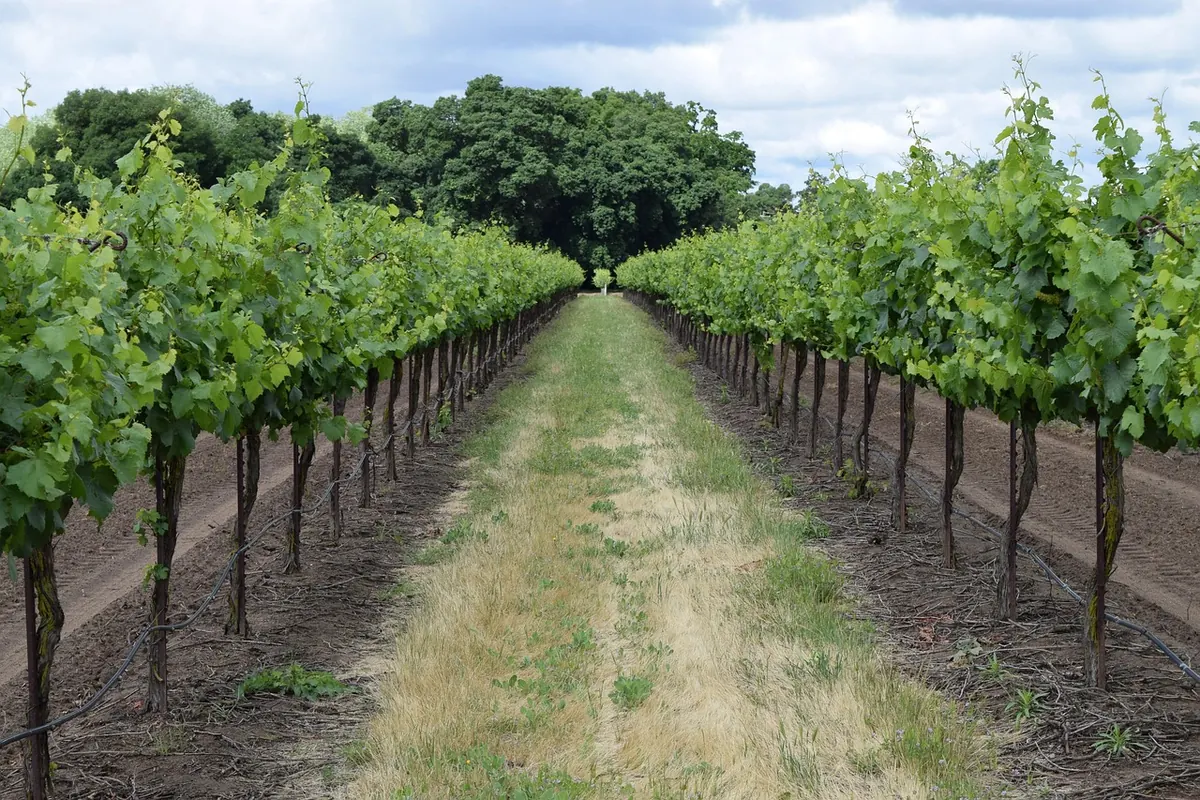
Along a wall, set cordon-trained vines 1.2 to 1.5 metres apart. In open ground, allow 1.2 metres between plants in the row and 1.8 to 2 metres between rows. Plant 30 to 40cm out from a wall rather than tight against it, because the wall's rain shadow leaves a dry strip at the base.
Run three or four horizontal wires, spaced 30 to 40cm apart, from about 40cm above ground up to roughly 1.8 metres. Use vine eyes and tensioners so the wires stay taut under the weight of fruit. A single cordon suits a wall; double Guyot suits a row.
Planting a bare-root vine
- Soak the roots in a bucket of water for an hour or two while you prepare the hole.
- Fork over the base of the hole and mix compost and bonemeal into the backfill.
- Form a small mound of soil in the base and spread the roots over it evenly.
- Backfill in stages, firming gently with your hands to remove air pockets.
- Set the vine so the graft union finishes 2.5 to 5cm above soil level. Bury it and the scion may root, wasting the rootstock's benefits.
- Water in thoroughly, even in midwinter, then mulch.
- Cut the stem back to two or three strong buds above ground, unless the nursery advises otherwise, and label the plant.
Bare-root vines go in between November and March while dormant. Never plant into frozen or waterlogged ground; heel them into a spare patch of soil and wait.
Planting a potted vine
Potted vines can go in whenever the soil is workable, though spring and early autumn give the best start. Water the pot well an hour beforehand, then slide the plant out and tease apart any roots circling the edge of the rootball. Plant at the same depth as before, keeping the graft union clear of the soil, and water generously. Do not leave the pot in the ground or bury it whole.
Aftercare through the first two years
Water young vines properly: roughly 10 to 20 litres a week in dry spells, more on sandy soil. Once established they are remarkably drought-tolerant, but the first two summers decide the root system you live with. Mulch 5 to 8cm deep with well-rotted compost, keeping it clear of the stem.
Go easy on feeding. Potassium from flowering onwards suits ripening fruit; heavy nitrogen does not. In the first year, let one or two strong shoots grow and tie them in as they extend. Remove any flowers or tiny bunches for the first two seasons so the plant puts its energy into roots and framework rather than a token crop.
Prune in winter, between December and February, while the vine is fully dormant. Through summer, shorten laterals to a couple of leaves beyond the developing bunch and keep the foliage open so air moves through it. Net ripening bunches against birds, and watch for powdery mildew in humid spells — thinning crowded growth is usually more effective than spraying.
If a late frost is forecast in May, drape horticultural fleece over emerging shoots for the night. It takes seconds and can save the season's crop.
Before you order your vine
Five things decide success: sun, drainage, spacing, water and the depth of that graft union. Order from a specialist nursery, ask which rootstock a variety is on, and buy bare-root in winter if you can — it is cheaper and establishes quickly. Then be patient. A vine planted this winter will not give you much next autumn, but by year three you will be handing grapes to the neighbours.
Photo: Thomas Pham / Pexels